
Cool Safety Tips for Dogs on Hot Days
Advice from a vet
Ruffwear ambassador Dr Bronwyn Fullagar, BVSc, MS, DACVS-SA is a veterinary surgeon. She lives in the Canadian Rockies with Arnie, her greyhound. When she's not working as a vet or volunteering for animal charities overseas, Dr Fullagar enjoys trail running, paddle boarding and skijoring with Arnie.
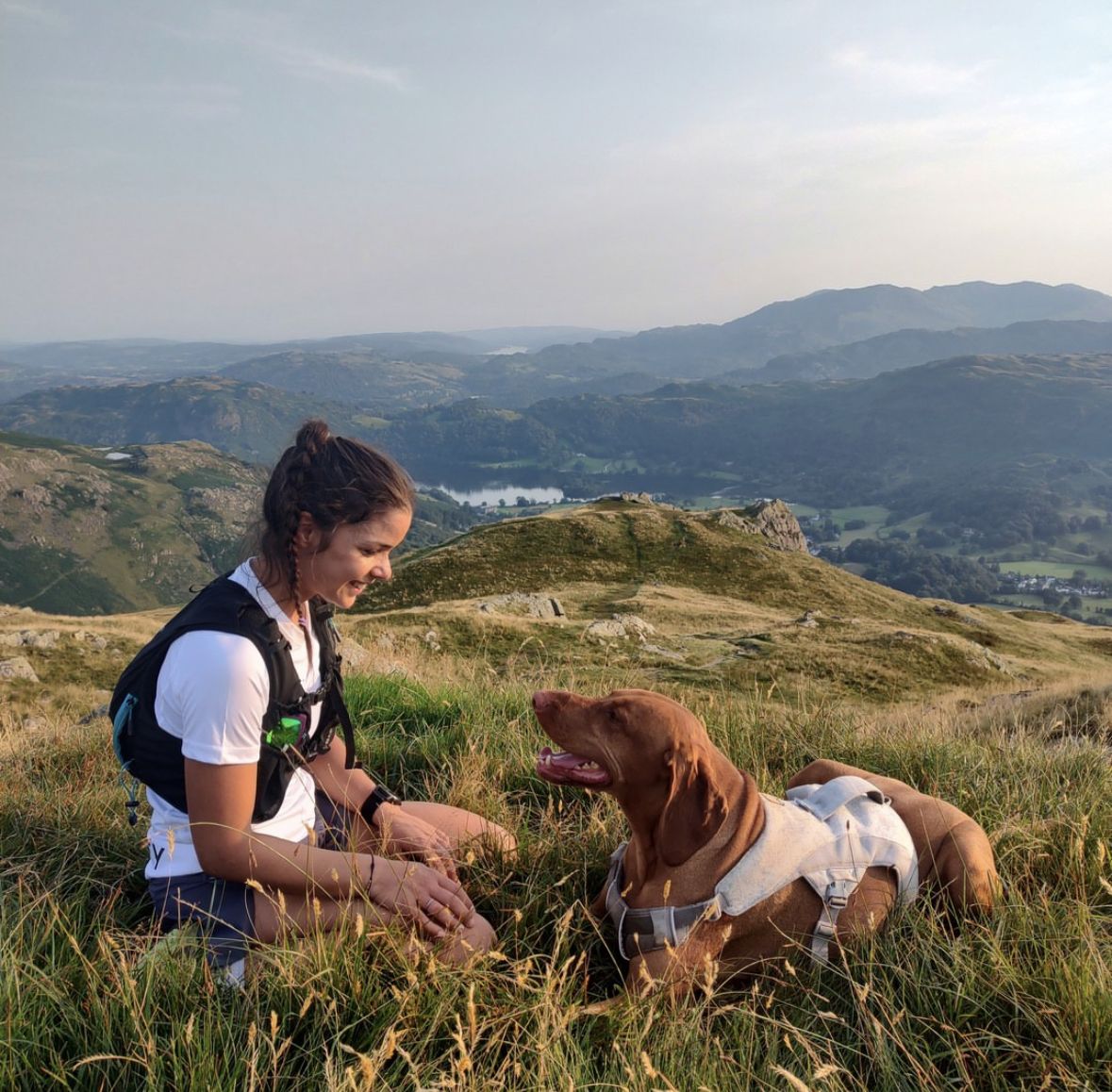
As winter gives way to warmer weather, dogs and their humans everywhere start looking forward to going on hikes again. Summer is full of long days, happy tail wags and dusty, tired legs. Before you can head out with your dog on your first warm-weather mission of the season, here are some important safety tips that will save you both a trip to the vet's emergency room.
One of the biggest dangers for dogs in warmer weather is heatstroke. This condition is most dangerous at the beginning of the season in the spring as it just starts warming up. If you're going to be outdoors with your dog, it's important to be prepared and know the signs to look out for so you can intervene early and cool your friend down before they become seriously ill.
Heat stroke is a heat-related illness that occurs when a dog's core body temperature rises above 40°C and can quickly become life-threatening. Heatstroke can occur when a dog is accidentally left in a hot environment (such as a hot car), but more commonly, we see cases of heatstroke due to strenuous exercise.
Have you ever noticed that a 15° day at the beginning of spring feels hot, but by the end of summer, you're reaching for a jumper si similar weather? That's because both humans and dogs can get used to the hot weather. At the beginning of each summer, it takes about 60 days for the dog's cardiovascular system (heart, lungs and blood vessels) to adapt to the heat. This means that they become more heat-tolerant as the season progresses. Fitter, more active dogs adapt more quickly and to a greater extent than quieter dogs.
How do dogs cool down?

Unlike humans and horses, dogs do not sweat (apart from their paw pads) and rely on other methods to transfer heat to their environment. Panting allows warm, moist air to evaporate from the lungs and be exchanged with cool, dry air from the environment.
Panting requires an unobstructed, normal flow of air through the upper airways, so dogs with obstructive breathing (e.g. all brachycephalic dogs) are less efficient at cooling themselves through this mechanism.
Have you noticed that your dog likes to loll around on a cool tiled floor in summer? This is called heat conduction and is more effective in short-haired dogs.
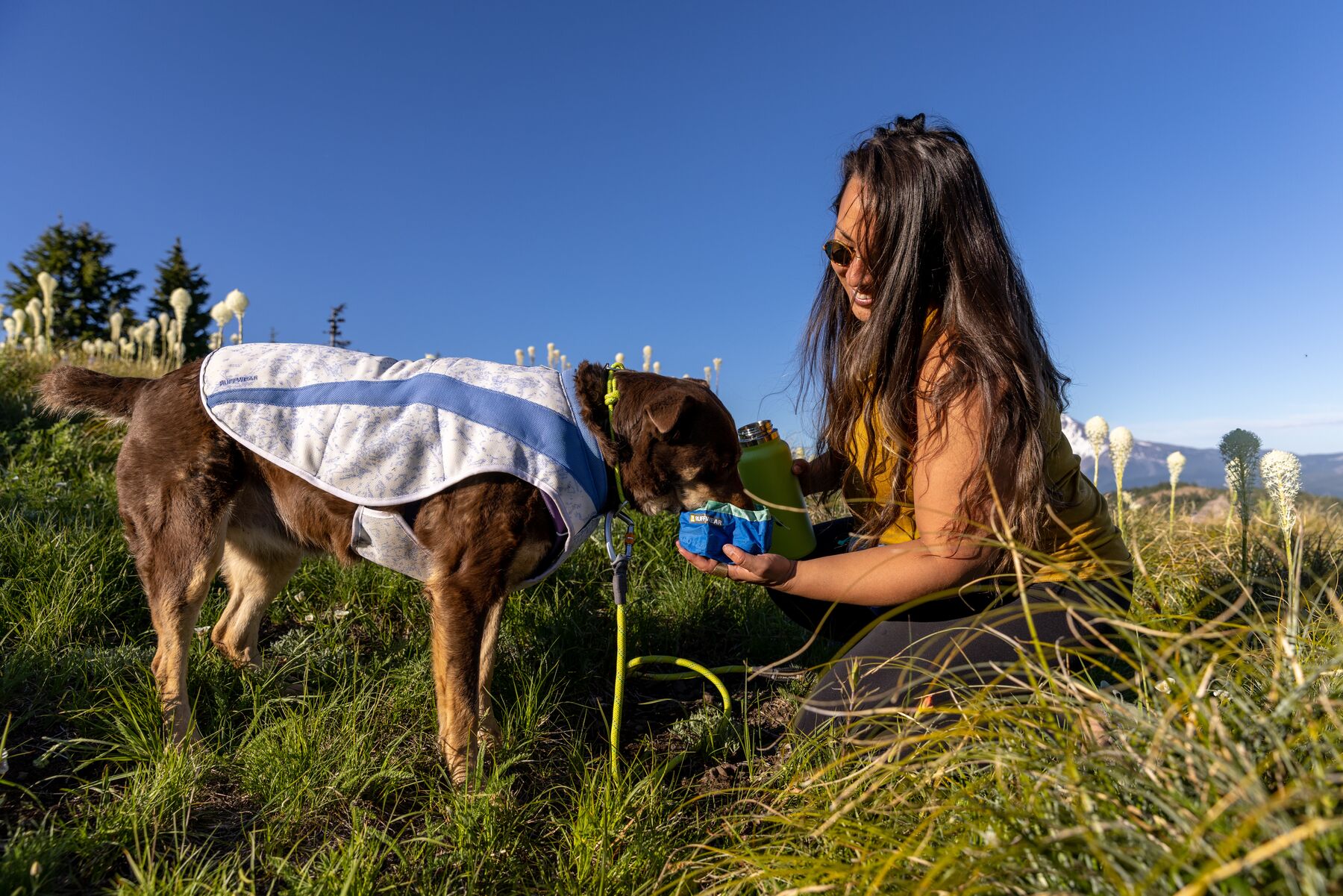
Like their human friends, dogs also cool down faster when they are wet, especially when there is a breeze. Ruffwear's Swamp Cooler™ cooling clothing works in this way - the water from the wet cooling jacket evaporates and is whisked away by air currents. It is important to note that cooling clothing is ineffective in a very hot environment with poor ventilation (e.g. in a hot car).
What are the signs of heatstroke in dogs?
The first signs of heat stress include heavy panting, lagging, tiredness, a desire to lie down, snoring noises when panting, balance problems and restless behaviour. If you notice these first signs while walking, stop immediately, provide water and shade, wet your dog's coat (or his cooling jacket), then go home and call the vet.
If these symptoms worsen despite your initial measures, if your dog has breathing problems, collapses, has brick-red, blue or very pale gums, can't walk or doesn't respond to you normally, see a vet immediately.
Which dogs are most at risk of heatstroke?
Although dogs of all ages and breeds can get overheated, some are more susceptible than others, and what is mild for one breed can be life-threatening for another. Here are some examples of dogs that are less tolerant of heat and should therefore take extra care during summer activities.
- Brachycephalic breeds: Brachycephalic or "flat-faced" breeds include French Bulldogs, English Bulldogs, Pugs and Boston Terriers. Many brachycephalic dogs suffer from what is known as brachycephalic obstructive airway syndrome, a congenital narrowing and obstruction of the upper airway. Because of this, they cannot pant effectively and overheat quickly, which can lead to heat stress and heat stroke. You must take extra care of your flat-faced dog and take extra precautions to keep them cool. A cooling jacket could be a great addition to your dog's summer wardrobe!
- Puppies younger than 8-10 months and ageing seniors are less able to regulate their body temperature than healthy adult dogs.
- Dogs with heart, lung or respiratory problems (e.g. laryngeal paralysis in older large breed dogs) are less able to adapt to the heat and pant to regulate their body temperature. If you're not sure whether your dog has a heart, lung or respiratory condition, ask your vet for advice.
- Dogs with thick or dark coats get hotter faster than dogs with thin, light-coloured coats. Dogs with very thick coats (e.g. Newfoundlands, Arctic breeds) are more susceptible to heat stress than a breed adapted to the desert such as a Vizsla or Whippet.
- Overweight dogs are less efficient at thermoregulating in hot weather.
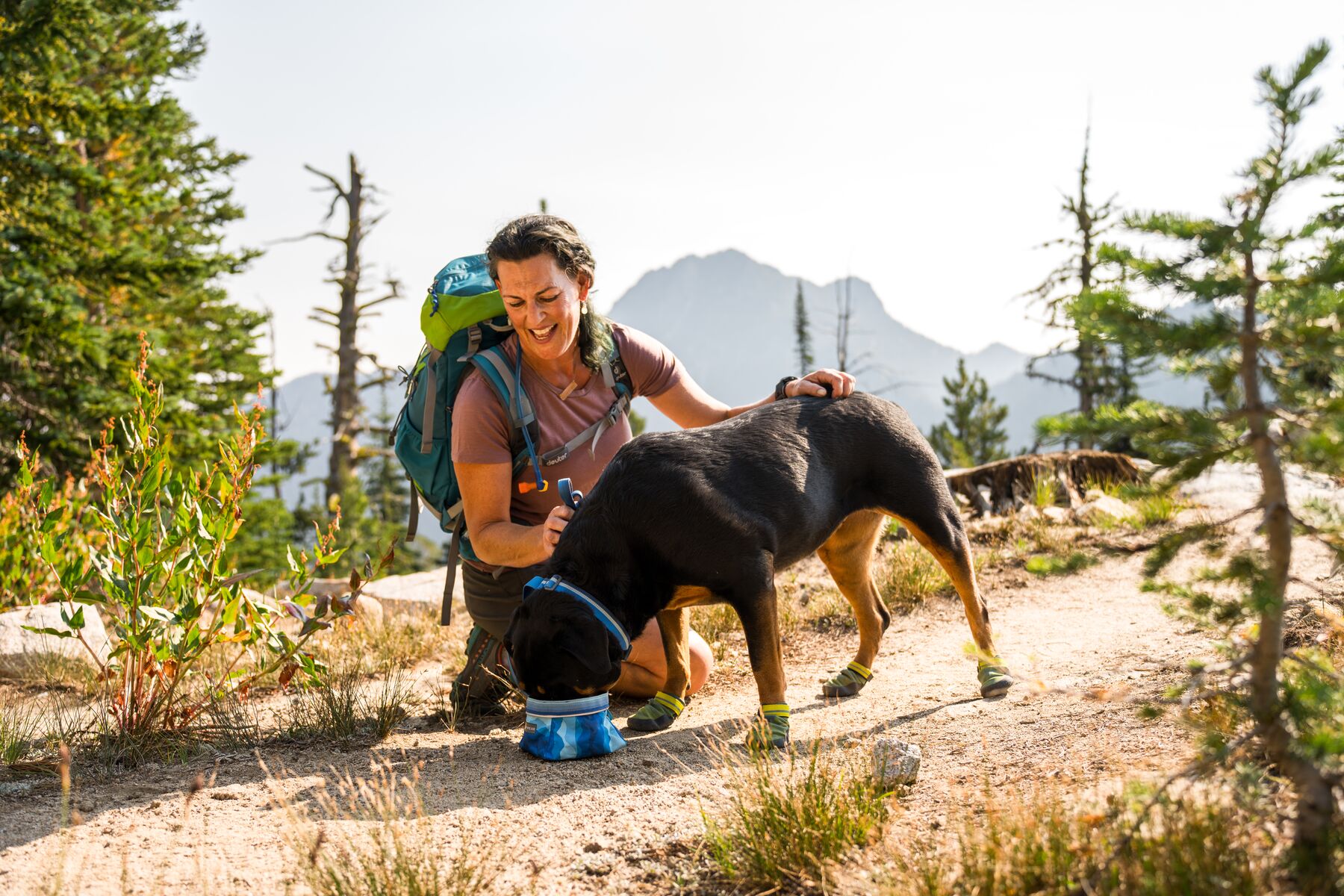
How can I prevent my dog from getting heatstroke?
Here are 6 tips to prevent heatstroke:
1) Start slow
The best way to get your dog used to warm weather is to gradually acclimatise them to warm temperatures early in the season. As the weather gets warmer, you should only give your dog enough exercise to make them feel warm (panting), but not so much that they suffer heat stroke (weakness, anxiety, fainting). In hot weather, start with short distances and gradually increase the duration, distance and altitude. Take water and something cooling with you to avoid overheating.
2) Plan in advance
Keep activities short, take breaks and choose activities where shade and/or water is available so your dog can cool down. Exercise in the cooler morning and evening hours and avoid strenuous activities in the heat of the day.
3) Give your dog plenty of fluids
It's not easy to get your dog to drink when necessary, and many dogs are very picky when it comes to where they drink outside of their home (i.e. only the dirtiest puddle is suitable). I like to add a cup or two (250ml) of water to Arnie's food in the morning when we go for a run. That way, I know his day is off to a good start.
4) Take water and a bowl with you
If you take a separate water bottle for your dog, you can reuse the water in the bowl your dog leaves behind (the Trail Runner™ Vest comes with compatible water bottles). I also like to carry a few treats that I can put in Arnie's water to entice him to drink. The Trail Runner™ bowl is my personal favourite. It folds down to a compact, tiny size so it fits easily in my rucksack.
How much water should you take for your dog? This depends on various factors, but a good starting point is 20ml per kg of body weight and per hour of exercise. This equates to around 700ml to 1 litre for an average Labrador on a 1 hour walk or 150 to 250ml for an average Shih Tzu. The more intense the activity, the hotter the weather or the higher the humidity, the higher will be the water requirement. Don't forget to pack some extra water in case of spillages and to keep his fur or cooling gear wet.
5) Watch your friend
Dogs are experts at living in the moment, but that also means they don't know when to take a break! They willingly overexert themselves to the point of life-threatening heatstroke, especially during strenuous activities like mountain biking or running with friends at the dog park. Keep an eye on your dog, encourage them to rest in the shade or jump in the river, and be prepared to return to the starting point if they show signs of heat stress.
6) Use cooling gear
Ruffwear's Swamp Cooler collection is designed to keep your dog's body temperature cool through evaporation. As the water in the wet cooling gear evaporates, the heat is wicked away from the body and released into the surroundings. The equipment works best in well-ventilated areas where there is a breeze.
But most importantly, listen to your dog, be prepared to change your plans and when in doubt, take a break. Have a happy, safe summer full of smiles and wagging tails!
Related products
-
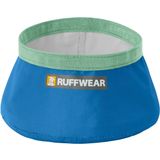
Ruffwear Trail Runner™ Bowl Blue Pool
- Foldable, ultra-light bowl
- Foldable
- Easy to clean
-
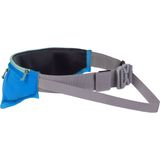
Ruffwear Trail Runner™ Running Belt Blue Pool, L/XL
- Reflective elements
- Adjustable waist belt
- Two stretch pockets with zip fastener
-
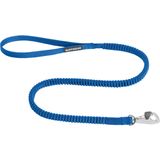
Ruffwear Trail Runner™ Lead Blue Pool 1.0 - 1.80 m
- Compact design
- With swivel joint and locking mechanism
- Stretch strap absorbs jolt
Magazine Articles:
Discover Zoolini:
-
Great Britain: Free standard delivery from £69.90
-
Free
returns More than 9.600 products
Secure payments
with SSL encryption technology